History and ArchaeologyWordPress

Appalachianhistorian.org

Appalachianhistorian.org
History of the Appalachia Region
Home PageAtom Feed
language
Appalachian HistoryLeslie County KY
Published
Author Alex Hall

Appalachian History Leslie County did not appear on the map until 1878, when the legislature carved it from Clay, Harlan, and Perry Counties and named it for Governor Preston H. Leslie. Its new seat, Hyden, rose at the mouth of Rockhouse Creek on the Middle Fork of the Kentucky River, in a landscape of steep ridges and narrow bottoms. That geography matters.
Appalachian HistoryRowan County KY
Published
Author Alex Hall

Appalachian History Rowan County on the War’s Ragged Edge When the Civil War reached the upper Licking River, Rowan County was still a young place. Created in 1856 from parts of Fleming and Morgan Counties, it had a new courthouse at Morehead, scattered farms along Triplett Creek and the Licking, and roads that threaded east and west toward Mt. Sterling, Flemingsburg, and the Virginia line.

Appalachian HistoryRussell County KY
Published
Author Alex Hall

Appalachian History A River County on a Moving Front Russell County sat on the kind of landscape generals studied on maps. The Cumberland River bent like a great road of water along its southern edge. The county seat at Jamestown lay on the ridge road that linked Columbia and Albany.

Appalachian HistoryLee County KY
Published
Author Alex Hall

Appalachian History In the 1860s there was no Lee County on the map. The confluence of the North, Middle, and South Forks of the Kentucky River was divided among Estill, Owsley, and Breathitt Counties, a remote corner of the Commonwealth where flatboats and narrow roads carried people and goods in and out of the hills.

Appalachian HistoryPowell County KY
Published
Author Alex Hall

Appalachian History A Courthouse Town On The Edge Of The Mountains In the early 1860s Powell County sat where the Bluegrass began to wrinkle into mountains. The Red River threaded past small farms, iron works, and timber land on its way toward the Kentucky River. Stanton, a modest crossroads town, had been chosen as county seat after Powell County was carved out of surrounding counties in 1852 and named for Governor Lazarus W. Powell.

Appalachian HistoryRobertson County KY
Published
Author Alex Hall

Appalachian History Mt. Olivet did not yet have a county of its own when the Civil War came through on tired horses in June 1864. The crossroads village sat on the old Maysville–Lexington road, between the mineral springs at Blue Licks and the market towns strung along the Licking River. On paper it belonged partly to Bracken, partly to Harrison, Mason, and Nicholas.

Appalachian HistoryWhitley County KY
Published
Author Alex Hall

Appalachian History A border county on the Cumberland In the summer of 1863, Williamsburg was a small courthouse town on the Cumberland River, better known as Whitley Court House than as a battlefield. Whitley County itself was relatively young, carved from Knox County in 1818 with Williamsburg planted at the center as the county seat. The county sat in a dangerous place. Its southern edge touched the Tennessee line.

Appalachian HistoryLetcher County KY
Published
Author Alex Hall

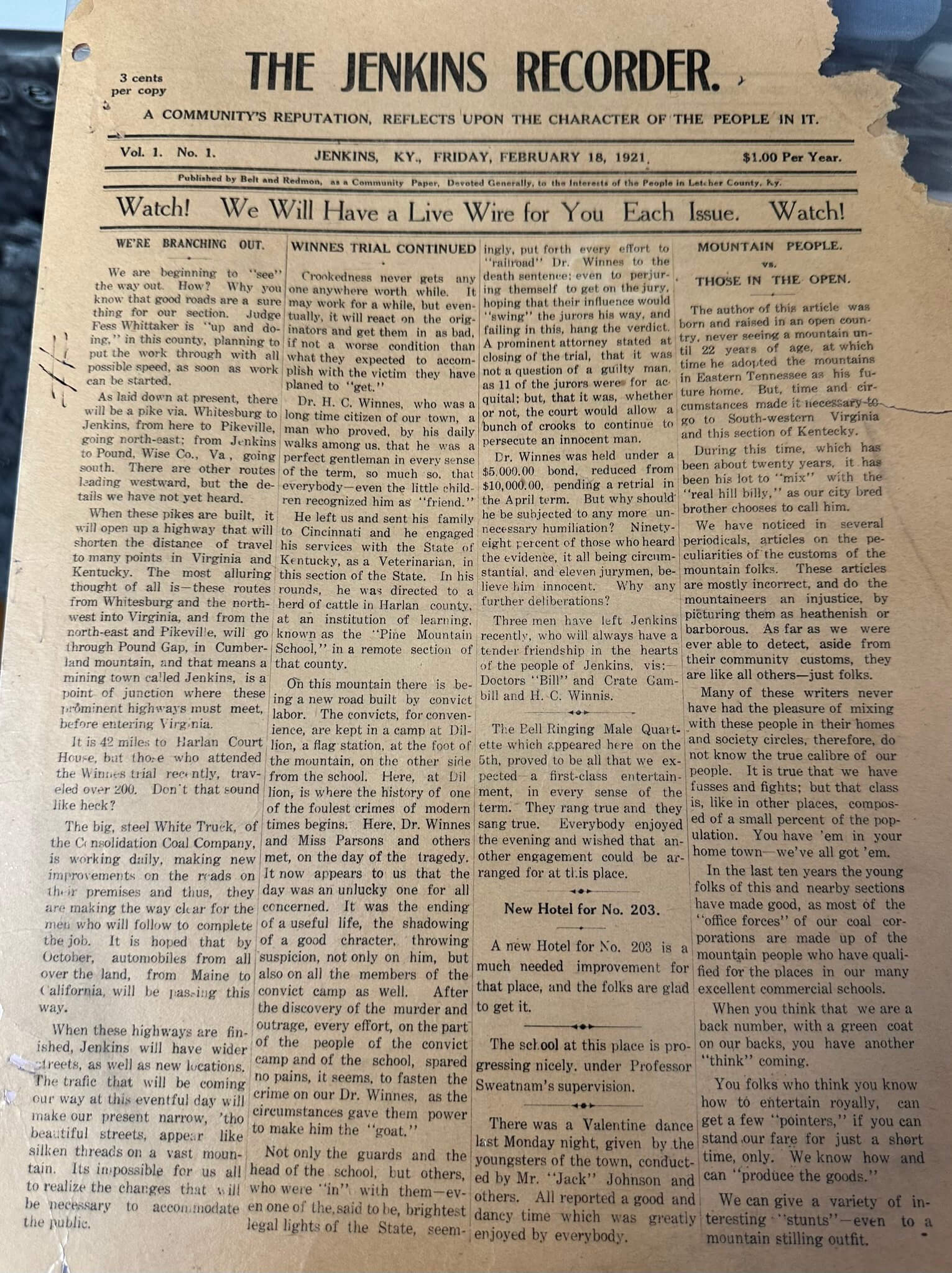
Appalachian History On winter mornings in the early 1920s, coal dust hung over Jenkins, Kentucky, while miners and store clerks climbed the steps of the big recreational building to buy their paper. Upstairs, on the second floor of that four story complex, a tiny shop ran the town’s one newspaper, the Jenkins Recorder.

Appalachian HistoryLetcher County KY
Published
Author Alex Hall

Appalachian History On a February evening in 1948, nearly fifteen hundred people streamed into a freshly remodeled storefront on Main Street in Jenkins. The Champion Dairy Bar offered bright red-and-cream décor, ice cream, and a free carnation to every woman who walked through the door.

Appalachian ChurchesLetcher County KY
Published
Author Alex Hall

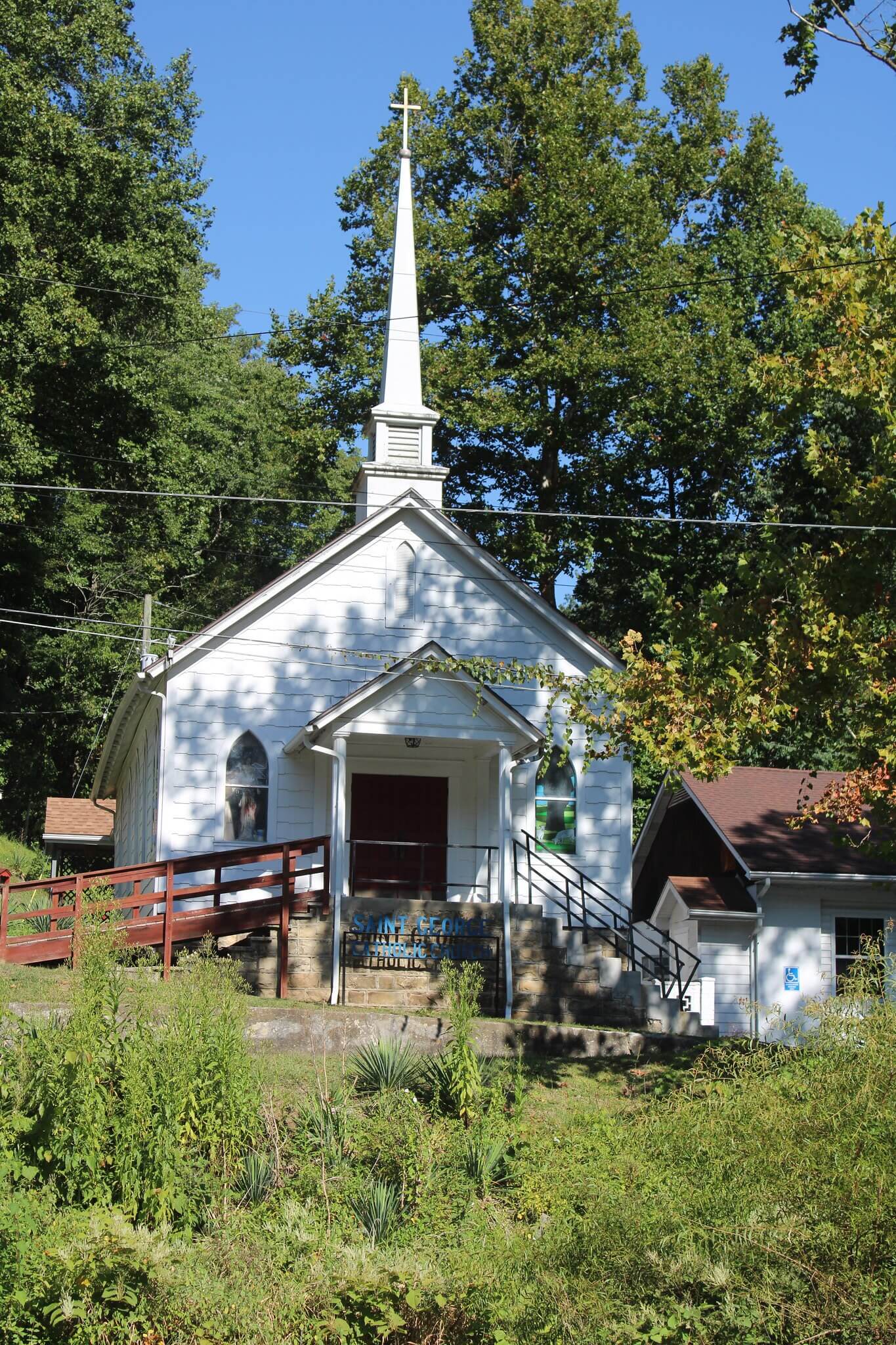
Appalachian Churches Tucked against the hillside at the foot of No. 4 Hill in Jenkins, Kentucky, St. George Catholic Church looks like a simple white frame church.