Computer and Information SciencesGhost

Front Matter

Front Matter
The Front Matter Blog covers the intersection of science and technology since 2007.
Home PageAtom FeedMastodonISSN 2749-9952
language
NewsComputer and Information Sciences
Published

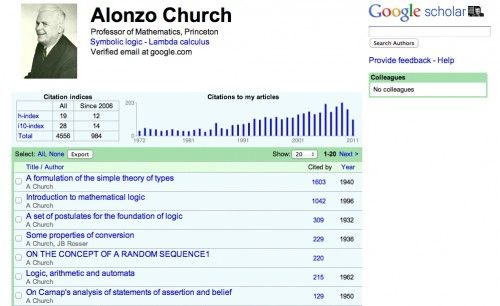
Last week Google Scholar announced a new feature on the Google Scholar Blog: Google Scholar Citations. The stated purpose of this tool is to allow researchers to calculate their citation metrics, e.g. their Hirsch index (H-index). This is an interesting new service, that not only helps with calculating citation metrics, but also shows you who is citing your papers – a great discovery tool.
MetadataComputer and Information Sciences
Published

Version 1.0 of the reference manager Mendeley was released today. In good Web 2.0 tradition it took three years from the first Beta release to the first “finished” product. I interviewed co-founder Victor Henning back in September 2008, and both the software and the company have gone a long way since then. Congratulations. Mendeley has changed reference management in many ways.

Science HackComputer and Information Sciences
Published

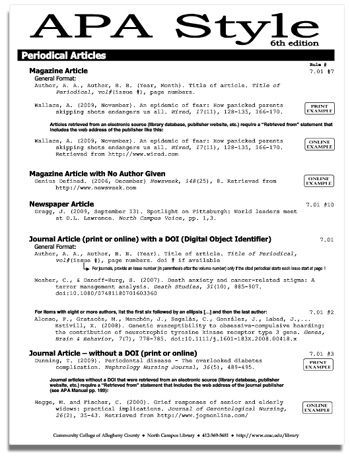
Other blog posts often provide important background material for your own posts, and they are typically cited by inline links in the text. But sometimes we need more formal citations, e.g. when citing blog posts in a journal article or when providing a bibliography. But how do you properly cite a blog post?

FeatureComputer and Information Sciences
Published

Brendan Thomas has published an interesting paper that looks at author email addresses in the PubMed database of biomedical literature. Email addresses of first authors have been added to PubMed since 1996, and they can be retrieved via the standard web interface or automated software. This makes PubMed an excellent place to find the email address of an academic author, but also shows that PubMed is very vulnerable to email address harvesting.

Meeting ReportComputer and Information Sciences
Published

Blogging is a great format to report from conferences. The regular blog format works best for posts written at the end of the day – unless you are typing really fast. Microblogging, i.e. a number of short or very short posts by a group of people, works better for live blogging of an event and has become very popular.

NewsComputer and Information Sciences
Published

Last week the first Alpha version of Annotum was released. Annotum is “a scholarly authoring and publishing platform based on WordPress”. I first learned about Annotum at the Beyond the PDF workshop in January. One of the themes of the workshop was that we need better tools for authoring, reviewing and publishing of scholarly articles.

FeatureComputer and Information Sciences
Published

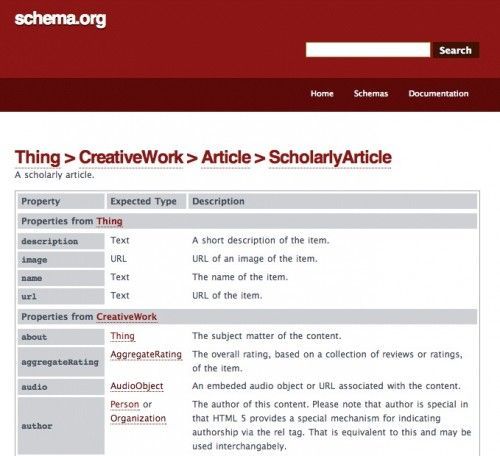
At the beginning of the month Google, Bing and Yahoo announced schema.org, a new initiative for structured markup on the web. Richard MacManus responded with a critical piece at ReadWriteWeb (Is Schema.org really a Google Land Grab?), mainly criticizing that the initiative didn’t use RDFa and didn’t seem to have consulted with the web standards body W3C.

Meeting ReportComputer and Information Sciences
Published

The Science Online London 2011 Conference takes place September 2-3 at the British Library. I am again one of the organizers (together with Lou Woodley from Nature.com and Kaitlin Thaney from Digital Science), and I’m getting both excited and nervous the closer we get to September. We have recently posted a first draft of the conference program, and you can see that we are trying something new.

NewsComputer and Information Sciences
Published

Last Thursday the search engines Google, Bing and Yahoo announced schema.org, a new initiative for structured data markup on the web. Websites that use this schema to markup their data (more than 100 data types are supported) will make it easier for the three largest web search engines to find their content. Schema.org uses microdata, not microformats or RDFa, according to the FAQ this was a pragmatic decision.

FeatureComputer and Information Sciences
Published

Ten days ago I mentioned a paper by Zhiyong Lu that gives an overview over the available web tools to search the biomedical literature. Most of these tools enhance the PubMed service, and Zhiyong Lu in fact works for the NCBI, the developer of PubMed. In this post I want to take a more detailed look at the available tools. A good starting point is the companion webpage to the paper, listing 28 services.