Social ScienceWordPress

Scholarly Communications Lab | ScholCommLab

Scholarly Communications Lab | ScholCommLab
Home PageAtom Feed
language
Open AccessScholarly CommunicationSocial Science
Published
Author ScholCommLab

This week marks the 10 year anniversary of Open Access Week—a global event that strives “to make Open Access a new norm in scholarship and research.” In celebration of this momentous occasion, the University of Ottawa Library asked ScholCommLab co-director Stefanie Haustein about recent trends in open access and scholarly communication.
Preliminary FindingsResearchHypothesisSocial AnnotationSocial Science
Published

By Alice Fleerackers, Juan Pablo Alperin, Esteban Morales, and Remi Kalir Picture the last time you sat down to read an article for class. If your university experience was anything like most students’, chances are, you were alone. While solitary reading has benefits and is a common aspect of learning in higher education, it may not be the most effective way to read.

ResearchAltmtericsEmojisTwitterSocial Science
Published

“Should there be an emoji for everything?” asked journalist Sophie Haigney in a recent New Yorker article. “What, exactly, do we want from our emojis?” The future of the emoji may be uncertain, but one thing is abundantly clear. Emojis are booming. From classic smiley faces to dancing “party parrots,” there are now almost 3,000 options to choose from. They fill our text messages, our Slack chats, our emails—even some of our books.

EventsFSCI2019Open AccessSocial Science
Published

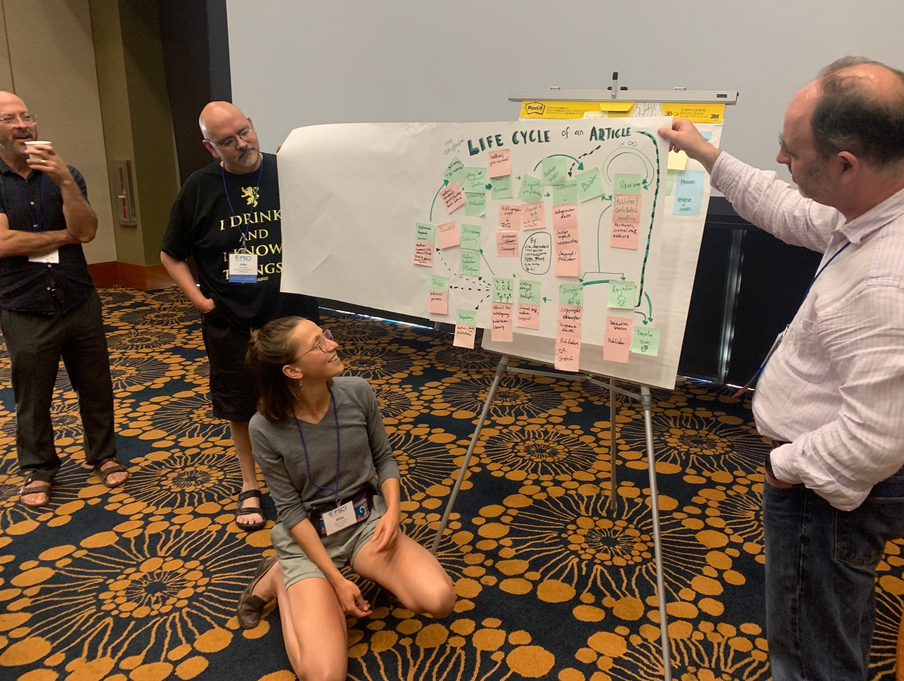
Each year in August, researchers, librarians, educators, students, and open access advocates gather together for the FORCE11 Scholarly Communication Institute (“FSCI”)—a jam-packed week of learning, discussion, and celebration of all aspects of scholarly communication. This year, I was lucky enough to be one of them—thanks to a generous travel scholarship. The experience was one I’ll never forget.

ResearchPreprintRPTTenure DecisionsSocial Science
Published

By Meredith T. Niles, Lesley Schimanski, Erin McKiernan, and Juan Pablo Alperin – with Alice Fleerackers As tenured faculty positions become increasingly competitive, the pressure to publish—especially in “high impact” journals—has never been greater. As a result, many of today’s academics believe having a strong publication record is necessary for the review, promotion, and tenure (RPT) process.

Preliminary FindingsResearchOpen AccessRPTSocial Science
Published

By Juan Pablo Alperin, Esteban Morales and Erin McKiernan.  First published on the LSE Impact Blog on July 17, 2019. The language of Open Access (OA) is littered with so many colours, metals, and precious stones, that you would be forgiven for losing track.