InformatikEnglischGhost

Front Matter

Front Matter
The Front Matter Blog covers the intersection of science and technology since 2007.
StartseiteAtom-FeedMastodonISSN 2749-9952
language
Open InfrastructureInformatikEnglisch
Veröffentlicht

In May, the Make Data Count team announced that we have received additional funding from the Alfred P. Sloan Foundation for work on the Make Data Count (MDC) initiative. This will enable DataCite to do additional work in two important areas: * Implement a bibliometrics dashboard that enables bibliometricians – funded by a separate Sloan grant – to do quantitative studies around data usage and citation behaviors.
MetadataInformatikEnglisch
Veröffentlicht

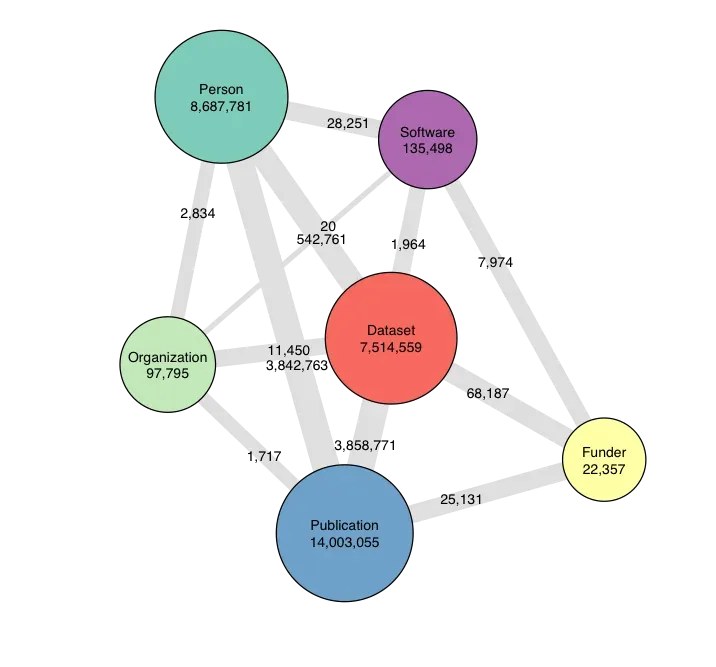
Today DataCite launches a new API that powers the PID Graph, the graph formed by scholarly resources described by persistent identifiers (PIDs) and the connections between them. The API is powered by GraphQL, a widely adopted Open Source technology that enables queries of this graph, addressing use cases of our community in ways that were not possible before.

Open InfrastructureInformatikEnglisch
Veröffentlicht

In a blog post four weeks ago DataCite Executive Director Matt Buys talked about the DataCite strategic priorities for 2020 (Buys, 2020). In this post we want to talk a bit more about the strategic priorities for this year we have regarding services and infrastructure work: a) consolidation of our services and infrastructure, and b) stronger emphasis on member-driven product development.

MetadataInformatikEnglisch
Veröffentlicht

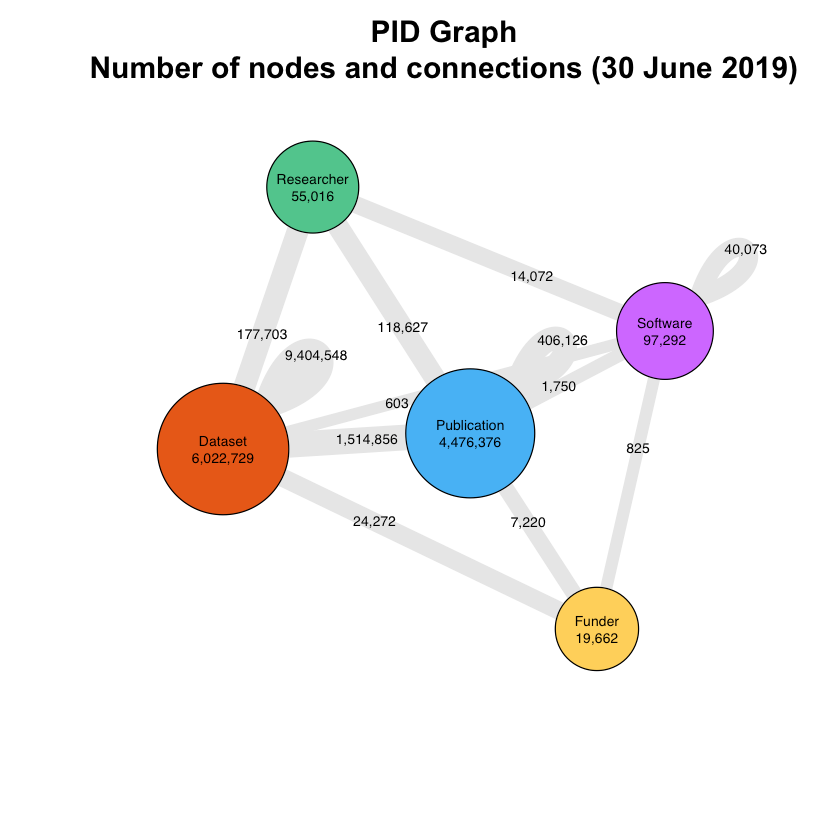
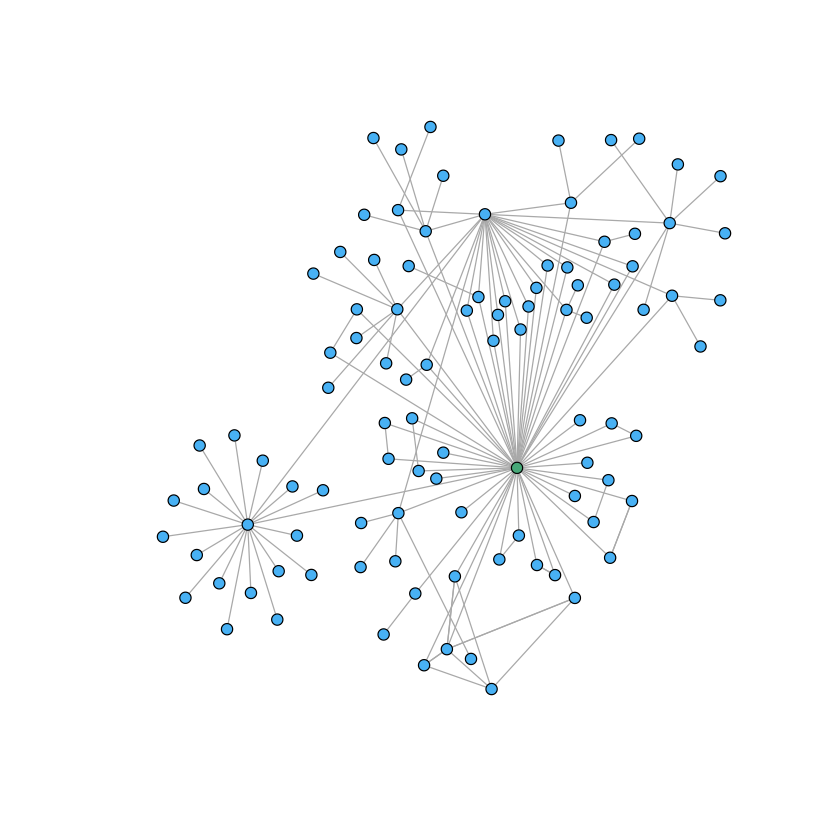
The connections between scholarly resources generated by persistent identifiers (PIDs) and associated metadata form a graph: the PID Graph [Fenner & Aryani (2019)]. We developed this PID Graph concept in the EC-funded FREYA project, and have identified important use cases and technical requirements. In May, DataCite introduced a GraphQL API to standardize and simplify how users can contribute to and consume the PID Graph [Fenner (2019b)].

Open InfrastructureInformatikEnglisch
Veröffentlicht

DataCite DOIs describe resources such as datasets, samples, software and publications with rich metadata. An important part of this metadata is the description of connections between resources that use persistent identifiers (PIDs) provided by DataCite and others (Crossref, ORCID, ROR, ISNI, IGSN, etc.). Together these resources and their connections form a graph, the PID Graph (Fenner &

MetadataInformatikEnglisch
Veröffentlicht

DOI metadata provenance is describing the history of a particular DOI metadata record, i.e. what changes were made when and by whom. This information is now stored and provided via an API for all DOI registrations since March 10, 2019. The following provenance information is now available via a new /activities REST API endpoint: * prov:wasGeneratedBy. The unique identifier for the activity making changes to a DOI record.

MetadataInformatikEnglisch
Veröffentlicht

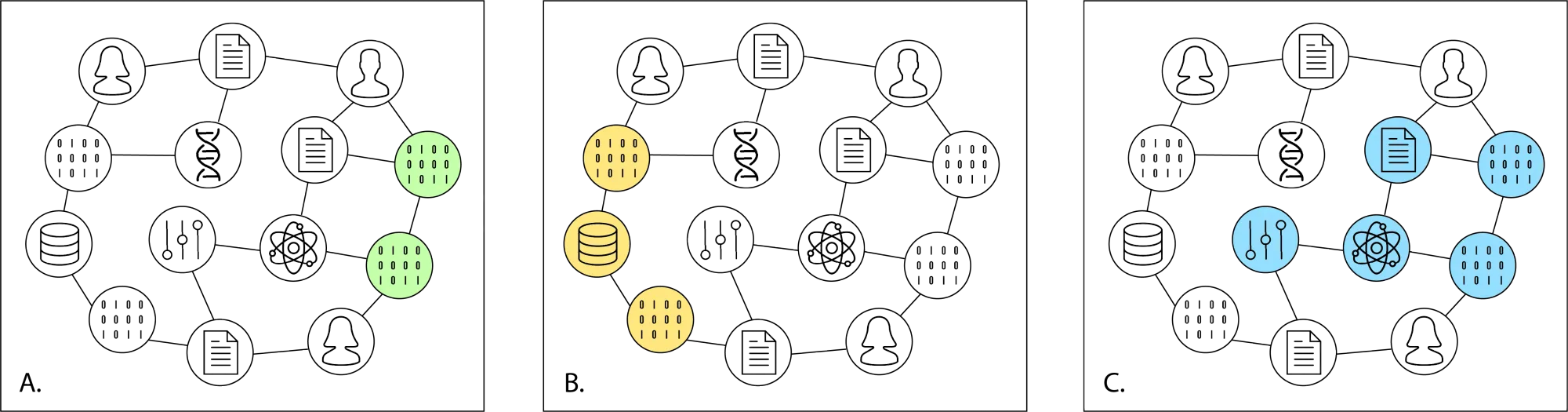
Persistent identifiers (PIDs) are not only important to uniquely identify a publication, dataset, or person, but the metadata for these persistent identifiers can provide unambiguous linking between persistent identifiers of the same type, e.g. journal articles citing other journal articles, or of different types, e.g. linking a researcher and the datasets they produced.

Open InfrastructureInformatikEnglisch
Veröffentlicht

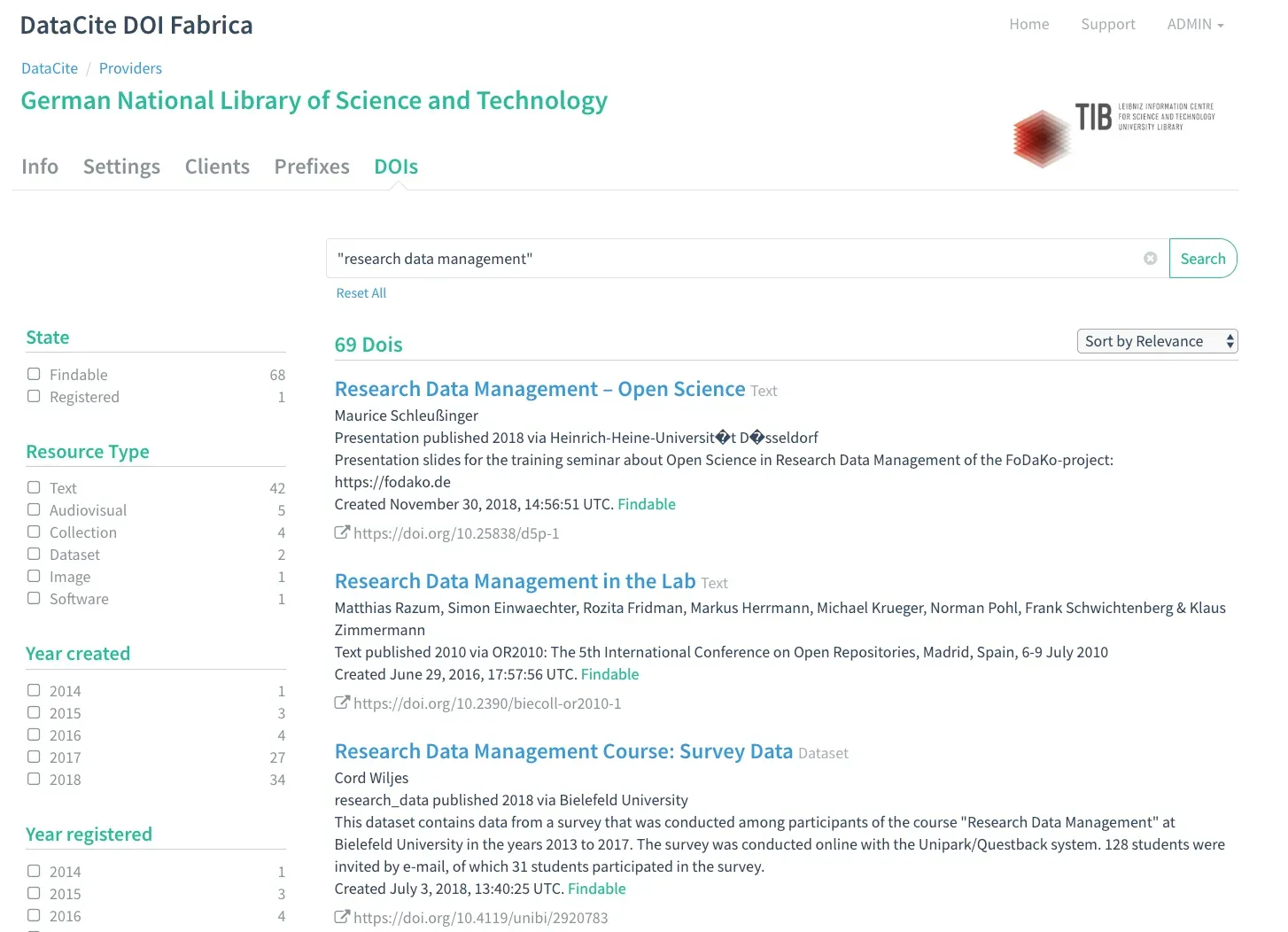
Today we are announcing our first new functionality of 2019, a much improved search for DataCite DOIs and metadata. While the DataCite Search user interface has not changed, changes under the hood bring many important improvements and are our biggest changes to search since 2012. Faster Indexing Newly registered (and tagged findable) DOIs now appear in the DataCite Search index within a few minutes, compared with the previous up to 12 hour lag.